Fiscalio
A local-first desktop app that turns your CFDI invoices into a RESICO tax return draft in minutes.
- Role
- Technical founder
- Year
- 2025–2026
- Status
- V1.0.7 · PRIVATE BETA
- Platform
- macOS (Apple silicon and Intel) · Windows
- Built with
- Electron · React · Next.js · PGLite
- Links
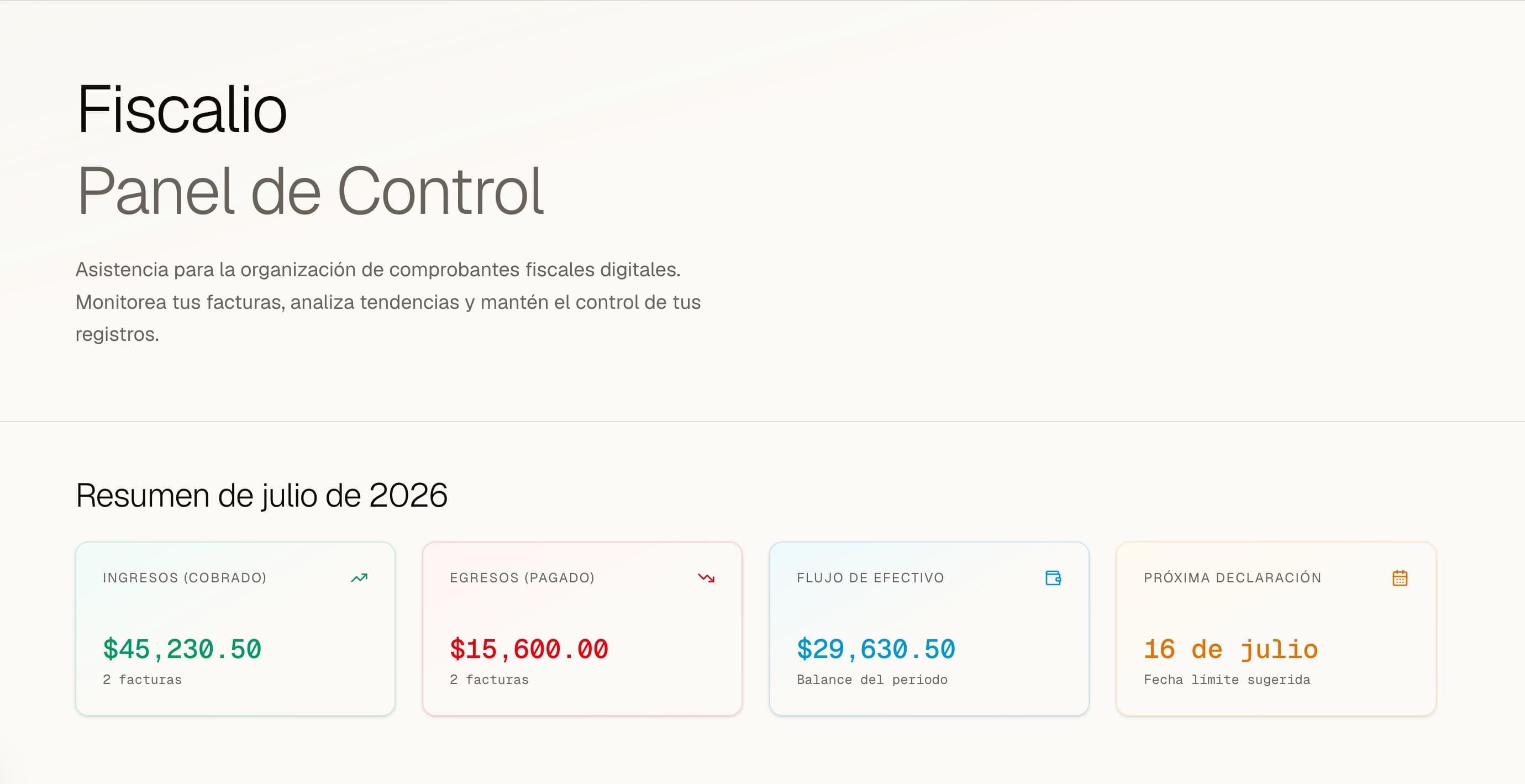
01The problem
If you're in RESICO and invoice on your own, you issue and receive CFDI all month. At month's end, those XML files have to become a tax return: separate what you collected from what you invoiced, match payment complements, subtract withholdings.
That draft took me hours. I built Fiscalio because I'm one of those taxpayers.
02The decision
Local-first by default. Your XML files stay on your computer, and Fiscalio never asks for your SAT password or e.firma. Privacy isn't a setting you turn on: it's the shape of the product.
What I built first
Reading and validating CFDI. Everything starts with the XML; if reading fails, nothing else matters.
Cash basis. RESICO taxes what you collected, not what you invoiced; a PPD invoice waits for its payment complement.
Account suggestions with human review. The app does the repetitive work; you keep the final word.
The tax return draft. It was the step that took me hours.
A real local database. Your data stays on your computer and the app works offline.
What I left out
Issuing invoices. Your PAC or the SAT portal already does that; Fiscalio reads what you've issued.
Downloading from the SAT. It would need your SAT password or e.firma, and Fiscalio doesn't ask for them.
Bank reconciliation. It needs careful planning and probably a connection. A candidate for later.
03How it was built
Fiscalio is an Electron app for macOS and Windows. Inside, a Next.js and React app runs on your own computer, with no remote server. You load your XML files; the app parses them, validates them and shows them as invoices you can read. Everything is stored in PGLite, a Postgres database that lives in a file on your computer, with automatic daily and monthly backups.
AI in the product
The suggestions come from a pattern engine, not an LLM. For each invoice you classify, it stores a snapshot of its features: RFC, SAT product codes, taxes and currency. I chose this because every suggestion can be explained and everything runs offline.
When a pattern keeps landing on the same account, it gains confidence; with enough evidence, it becomes a rule. Correct a suggestion and that pattern loses confidence.
AI in my workflow
I used AI agents to build parts of the app from specs and phased plans I review at each checkpoint, to write the end-to-end tests and to run the first sales campaign.
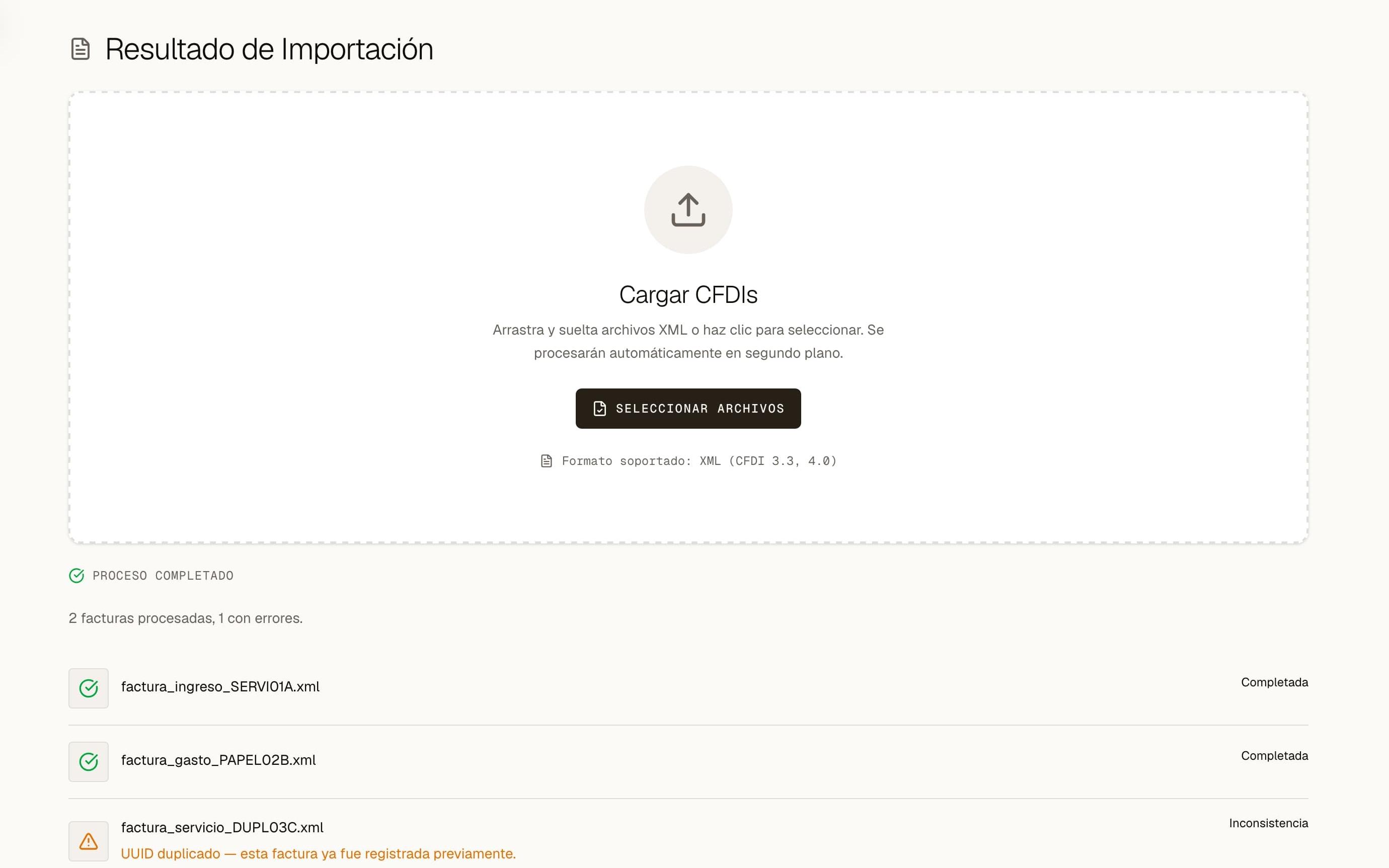
Load your XML files and read them as invoices. 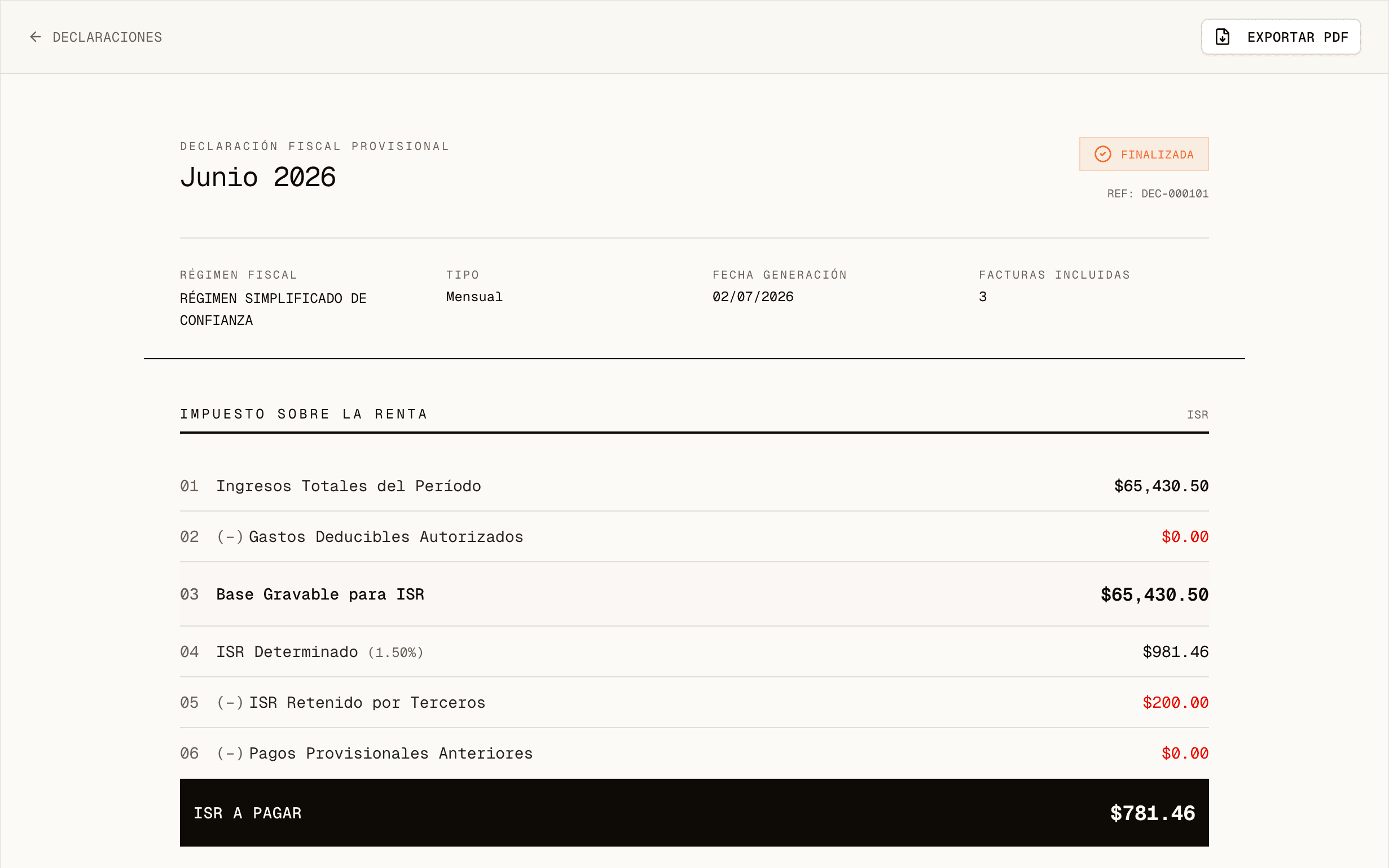
Review the tax return draft before you file.
04Where it stands
Fiscalio is at v1.0.7, in private beta. No results to show yet: in December 2026 I'm preparing drafts with the first users, using their real CFDI. I've prepared my own returns with Fiscalio since December 2025: the draft that took me hours now takes minutes.
In a local-first app, backups are the product's job. I learned it when my computer broke and I lost seven months of data; automatic backups shipped in 1.0.
What I'd do differently: build a set of test XML files from real cases from day one. Payment complements, credit notes and related CFDI are where the integration breaks.
Next: cancellations and substitutions, and how they adjust the taxes for a month you've already filed.